Depth
Fish deeper when it is bright or hot, and try shallower water in low light.
Many fishing games change fish behavior as the sky, season and clock change. This explainer covers common patterns and how to adapt your approach when conditions shift.
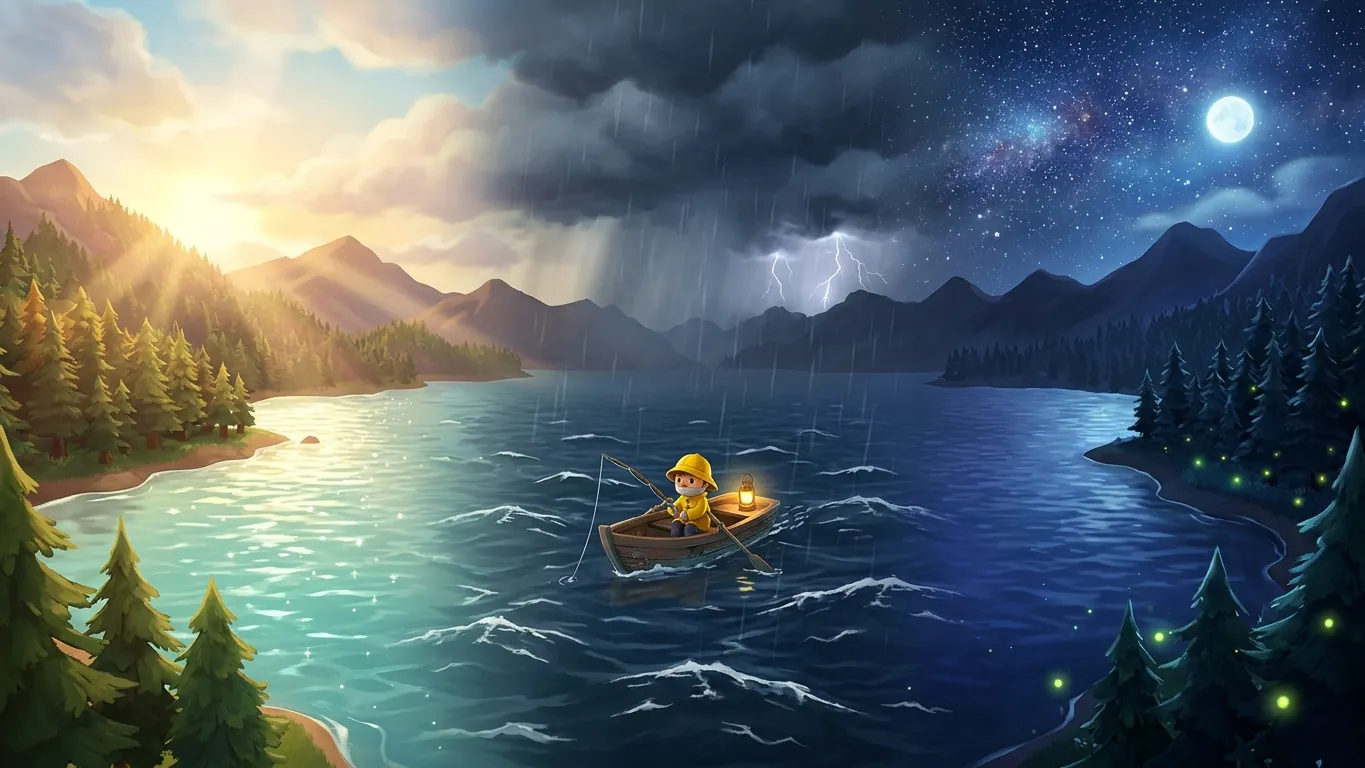
Not every fishing game models weather and time, but many do. Some include a simple day and night cycle, while others simulate rain, wind, air pressure, water temperature and full seasonal changes. These systems can affect which species are active, where they are found and what they are willing to bite.
Because each game handles conditions differently, the patterns below are general ideas rather than fixed rules. They are a starting point for experimenting in your own game.
A common pattern in fishing games is increased activity around dawn and dusk. Lower light and cooler temperatures at these times often make fish more willing to move into shallower water. During bright midday hours, some games push fish deeper or closer to shade.
Night fishing can be a distinct experience. Some games add nocturnal species, glowing lures or special visual effects after dark. If your game offers a night cycle, it is worth trying at least one session after sunset to see how the water changes.
Weather can change the feel of a session entirely. Overcast skies may encourage fish to roam more widely in some games, while bright sunshine may push them toward cover. Wind can create ripples that make topwater lures less effective but may stir up activity along windward shorelines.
Rain is handled in many different ways. Some games treat light rain as a good time to fish, while storms might reduce activity or make it unsafe to stay on the water in the game's logic. Pay attention to any hints the game gives through descriptions, weather icons or changes in bite frequency.
Games with seasons often shift fish locations over the year. Spring may bring fish into shallow areas, summer can push them deeper during hot periods, autumn might see active feeding, and winter can introduce ice fishing or very slow activity.
If your game runs on a seasonal calendar, keep an eye on what changes when a new season begins. Some species may become available only in certain months, and some locations may look and behave very differently.
When the weather or time shifts, try adjusting one of these factors.
Fish deeper when it is bright or hot, and try shallower water in low light.
Move toward shade, cover or wind-blown shorelines depending on conditions.
Switch between subtle and flashy lures to see what the fish respond to.
Slow down in cold or inactive conditions and speed up when fish seem active.
Plan sessions around dawn, dusk or specific weather if your game allows it.
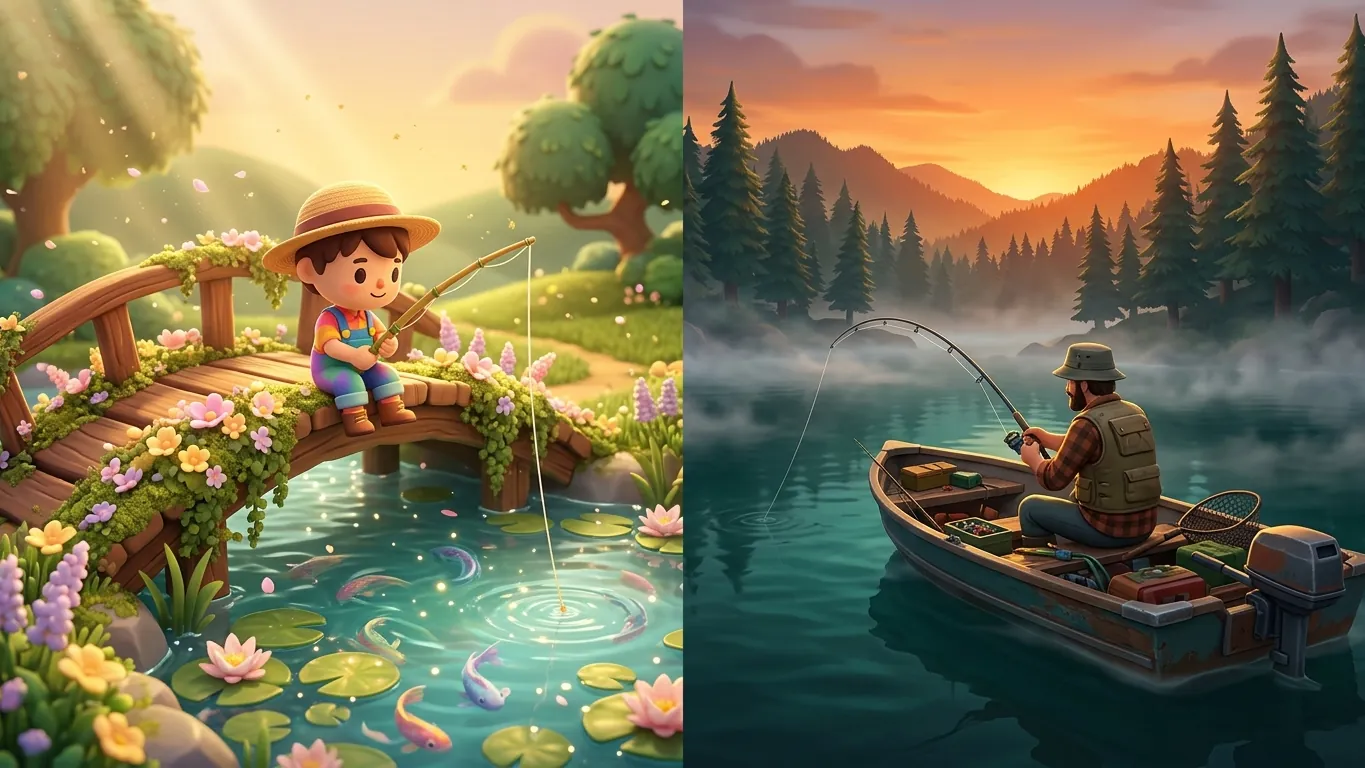 Cozy fishing vs. simulation fishing
An opinion piece comparing relaxed cozy fishing games with detailed simulators, to help you decide which style suits how you like to play.
Read more
 Ice fishing in video games: a practical guide
Practical tips for ice fishing in video games: finding spots, drilling holes, working small lures and staying patient on frozen virtual lakes.
Read more
 Upgrading gear without the grind
Tips for progressing in fishing games: setting priorities, spending in-game currency wisely and upgrading gear at a pace that keeps play fun.
Read more