Ice fishing in video games: a practical guide
Frozen lakes bring a quieter, more focused style of fishing to many games. This guide covers how ice fishing usually works and how to make the most of it.
How ice fishing differs
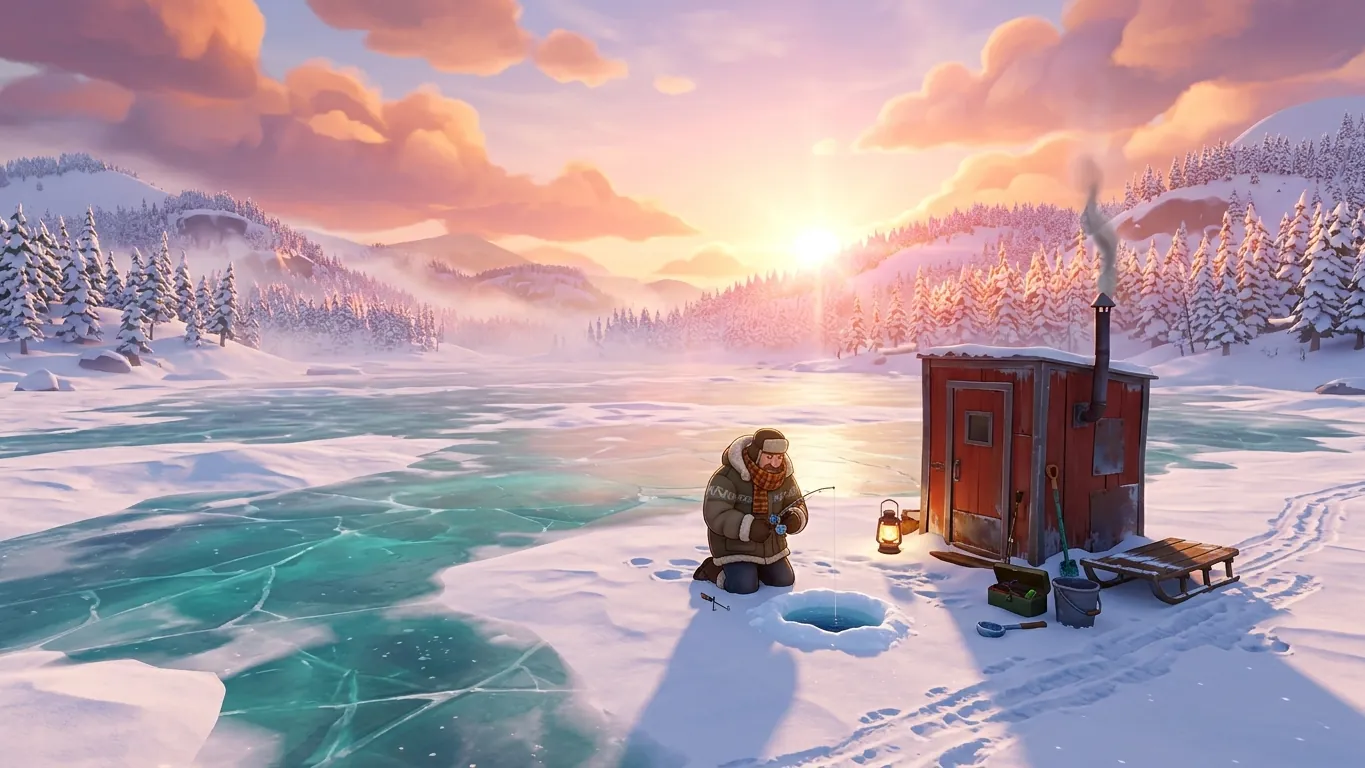
Ice fishing changes the rules of a typical fishing game. Instead of casting across open water, you drill a hole and fish straight down. Movement across the lake becomes a series of decisions about where to drill next. Lures are usually smaller, fights may be shorter, and the pace is often slower and more deliberate.
Many players enjoy ice fishing as a change of rhythm. The quiet landscapes, snowy visuals and focus on vertical presentation give it a distinct atmosphere compared with summer fishing.
Choosing where to drill
Since you cannot cast to reach fish, location matters even more on the ice. The same principles from open-water fishing still apply: look for drop-offs, underwater humps, weed edges and transitions between shallow and deep water. In games with depth maps or sonar, these tools become especially useful.
A practical approach is to drill several holes along a line that crosses from shallow to deeper water. Fish each hole for a short time, then move on. This helps you find the depth where fish are active on that particular day in the game.
A simple ice fishing routine
This routine can help you get started on a frozen lake in most games that include ice fishing.
- 01
Check the map
Look for depth changes and structure before you start drilling.
- 02
Drill a line of holes
Space a few holes across different depths so you can test several spots.
- 03
Drop to the right depth
Lower your lure near the bottom, then try raising it gradually to find active fish.
- 04
Use gentle movements
Small lifts and pauses often look more natural under the ice than fast retrieves.
- 05
Move if it stays quiet
If a hole produces nothing after a short wait, move to the next one.
Tackle for the ice
Ice fishing gear in games is usually compact: short rods, small reels and light line. Common lures include small jigs, tiny spoons and bait such as larvae or minnows. Because you fish vertically, the depth control of your lure becomes the main way to adjust your presentation.
If your game includes tip-ups or stationary rigs, they can let you cover more than one hole at once. Keep an eye on them while you actively jig in another hole, and react when a flag or signal indicates a bite.
Patience and atmosphere
Ice fishing often rewards patience. Bites may be subtle, and the game might signal them with a small twitch of the rod tip or a slight change on a sonar display. Watching closely and responding calmly is part of the challenge.
Take time to enjoy the setting as well. Snowfall, low winter sun and the quiet of a frozen lake are some of the most atmospheric scenes in fishing games. Even a slow session can be a peaceful way to spend an evening.
Related articles
 Upgrading gear without the grind
Tips for progressing in fishing games: setting priorities, spending in-game currency wisely and upgrading gear at a pace that keeps play fun.
Read more
Fishing games as travel companions
Why fishing games pair well with real travel: short sessions, calm pacing and virtual places that can spark curiosity about the outdoors.
Read more
 Getting started with fishing games
New to fishing games? Learn the core mechanics, from casting and hook sets to line tension, and how to build good habits in your first sessions.
Read more