Color changes
Shifts from light to dark water often mark a drop-off or deeper channel.
Knowing where to cast is often more important than knowing how to cast. These tips help you look at a virtual lake or river and spot the places where fish are likely to gather.
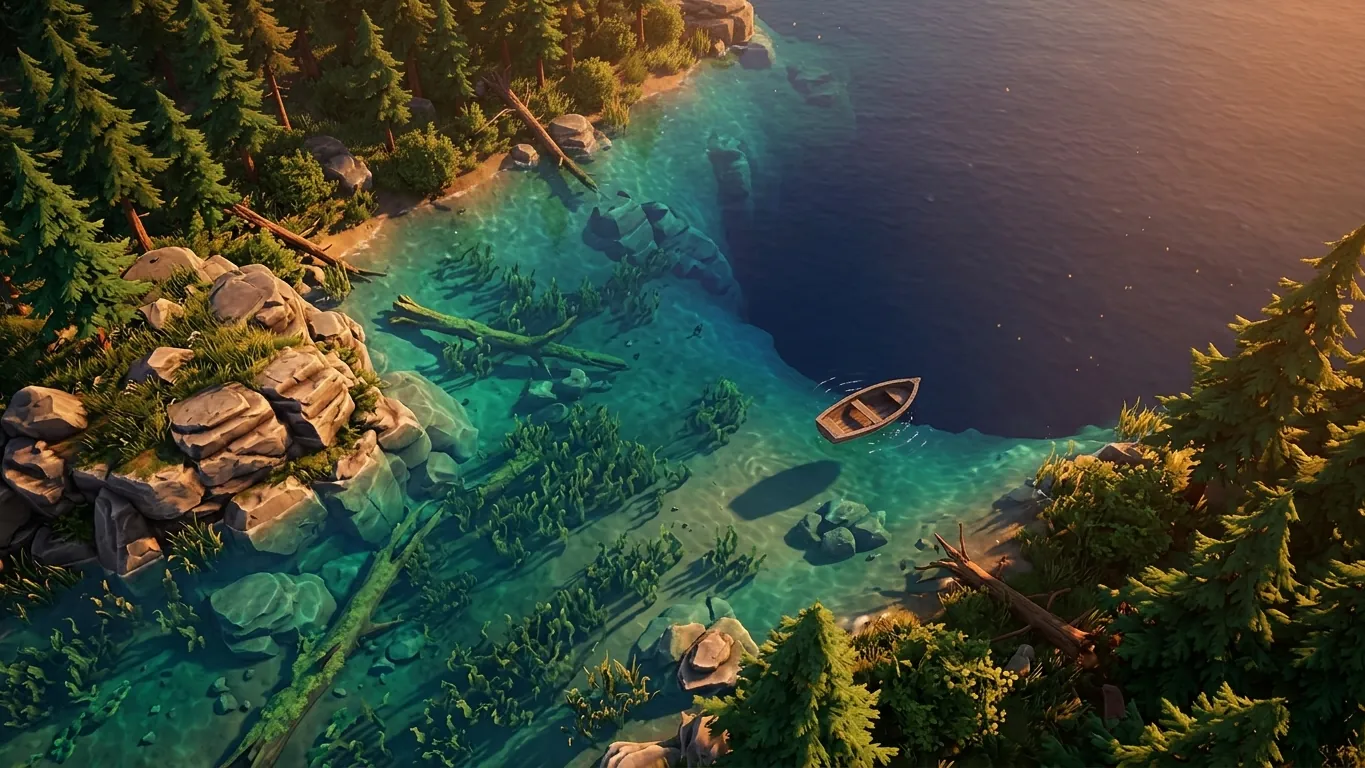
In many fishing games, fish are not spread evenly across the water. Developers often place them near features that make sense for the species, borrowing loosely from how fish behave in nature. Some prefer cover, some patrol open water and some stay near the bottom. If you cast at random, you may spend a long time waiting.
Reading the water means looking for clues about where fish might be. It is a skill that turns fishing from a waiting game into a thoughtful search, and it often makes sessions more engaging.
Structure is any change in the shape of the bottom or shoreline: points that stick out into the lake, underwater humps, ledges and drop-offs. Cover is anything fish can hide in or near, such as fallen trees, docks, lily pads and weed beds.
In games with clear water or detailed environments, you can often see these features directly. Look for darker patches that suggest deeper water, lines of weeds along the shore and branches poking through the surface. Casting along the edges of these features, rather than directly into the middle of them, can reduce snags and put your lure where fish tend to wait.
Rivers add another layer: moving water. Fish in rivers often hold where they can rest out of strong current while food drifts past. Good places to look include the calm water behind large rocks, the edges where fast and slow current meet, and deeper pools below small rapids.
In games that simulate current, your lure or float will drift downstream. Casting slightly upstream of a likely spot and letting the current carry your bait past it can look more natural. Watch how your line moves and adjust your cast position until the drift passes through the area you want to fish.
When you arrive at a new spot, take a moment to look for these signs before your first cast.
Shifts from light to dark water often mark a drop-off or deeper channel.
Ripples, rising fish or birds diving can hint at feeding activity, depending on the game.
Docks, overhanging trees and cliffs create shaded areas that some species seem to favor.
Where streams enter or leave a lake, moving water can bring food and attract fish.
Some games include depth maps or sonar tools that reveal underwater shapes.
Even with good reading skills, not every promising spot will produce a bite. A practical approach is to give each area a set number of casts. If nothing happens, move to the next feature and try again. Over a session, you will start to see which kinds of places work best for the species you are after.
Keep in mind that each game handles fish placement differently. Some use detailed behavior systems, while others use simpler zones. Paying attention to your own results is the most reliable way to learn how a particular game thinks about location.
 Tackle basics: rods, reels and lures in games
A plain guide to rods, reels, lines and lures in fishing games, with tips on matching your tackle to the species and water you want to explore.
Read more
 Planning a virtual fishing trip
How to plan a satisfying virtual fishing trip: picking a destination, setting goals, packing the right gear and enjoying the journey in game worlds.
Read more
 Weather, seasons and time of day in fishing games
An explainer on how many fishing games model weather, seasons and daylight, and how to adjust your spot, lure and pace when conditions change.
Read more