Live or natural bait
Worms, insects and small baitfish are simple and often attract a wide range of species.
Gear menus in fishing games can be full of unfamiliar terms. This article explains the main types of tackle and how to think about matching them to your goals.
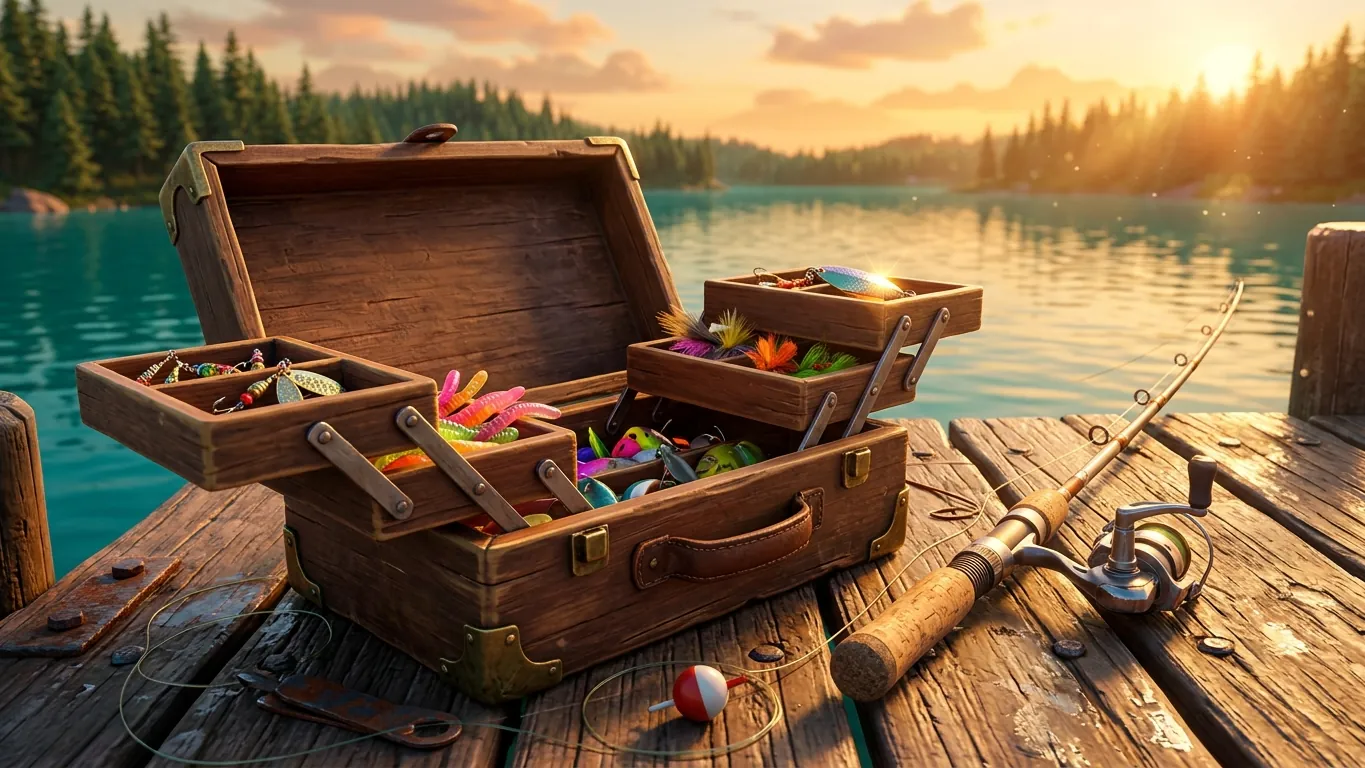
In many fishing games, your equipment shapes what you can catch and how the fight feels. Light tackle may let you enjoy small fish but struggle with larger ones. Heavy tackle can handle big species but may make small fish less likely to bite or harder to notice. Understanding the basic categories helps you make sensible choices instead of buying the most expensive item on the shelf.
Names and stats vary between games, but the underlying ideas are usually similar.
Rods in games are often described by length, power and action. Longer rods tend to cast farther, while shorter rods can feel more precise. Power describes how much force the rod can handle, from ultralight to heavy. Action describes where the rod bends: fast action rods bend mostly near the tip, while slower action rods bend more along their length.
As a general rule, match rod power to the size of fish you expect. A light rod is fun for panfish in a small pond, while a heavier rod makes more sense when chasing large predators near dense cover.
Reels in fishing games usually come in a few types. Spinning reels are often the beginner choice because they are easy to use and handle light lures well. Baitcasting reels can offer more control and strength but may be less forgiving in games that simulate tangles. Some games also include fly reels or simple trolling setups.
Line is the link between you and the fish. Games often track line strength and sometimes visibility. Stronger line can handle heavier fish and rough cover, while thinner line may draw more bites in clear water. If you keep losing fish to line breaks, consider stronger line or lighter drag settings, depending on what your game offers.
Lures and baits are where much of the strategy lives. These categories appear in many fishing games.
Worms, insects and small baitfish are simple and often attract a wide range of species.
These stay on the surface and can create exciting visible strikes, often in calm conditions.
Diving lures that reach a set depth when retrieved, useful for covering water quickly.
Flexible baits that can be worked slowly near the bottom or through cover.
Flashy metal lures that reflect light and vibrate, often good for active fish.
Light imitations of insects used with fly tackle, common in river and stream settings.
Before you change your setup, decide what you want to catch and where. Check the in-game journal or species guide if one exists, since many games describe preferred habitats and baits. Then pick a rod and line that suit the expected size, and a lure that reaches the depth where that species tends to feed.
It is often more useful to own a few versatile setups than many specialized ones. A light spinning outfit, a medium all-round setup and one heavier rig can cover a lot of situations in most games while keeping your in-game budget under control.
 Planning a virtual fishing trip
How to plan a satisfying virtual fishing trip: picking a destination, setting goals, packing the right gear and enjoying the journey in game worlds.
Read more
 Weather, seasons and time of day in fishing games
An explainer on how many fishing games model weather, seasons and daylight, and how to adjust your spot, lure and pace when conditions change.
Read more
 Cozy fishing vs. simulation fishing
An opinion piece comparing relaxed cozy fishing games with detailed simulators, to help you decide which style suits how you like to play.
Read more