Getting started with fishing games
Fishing games can look simple, but most of them reward patience and a little understanding of their core loop. This guide walks through the basics so your first sessions feel relaxed rather than confusing.
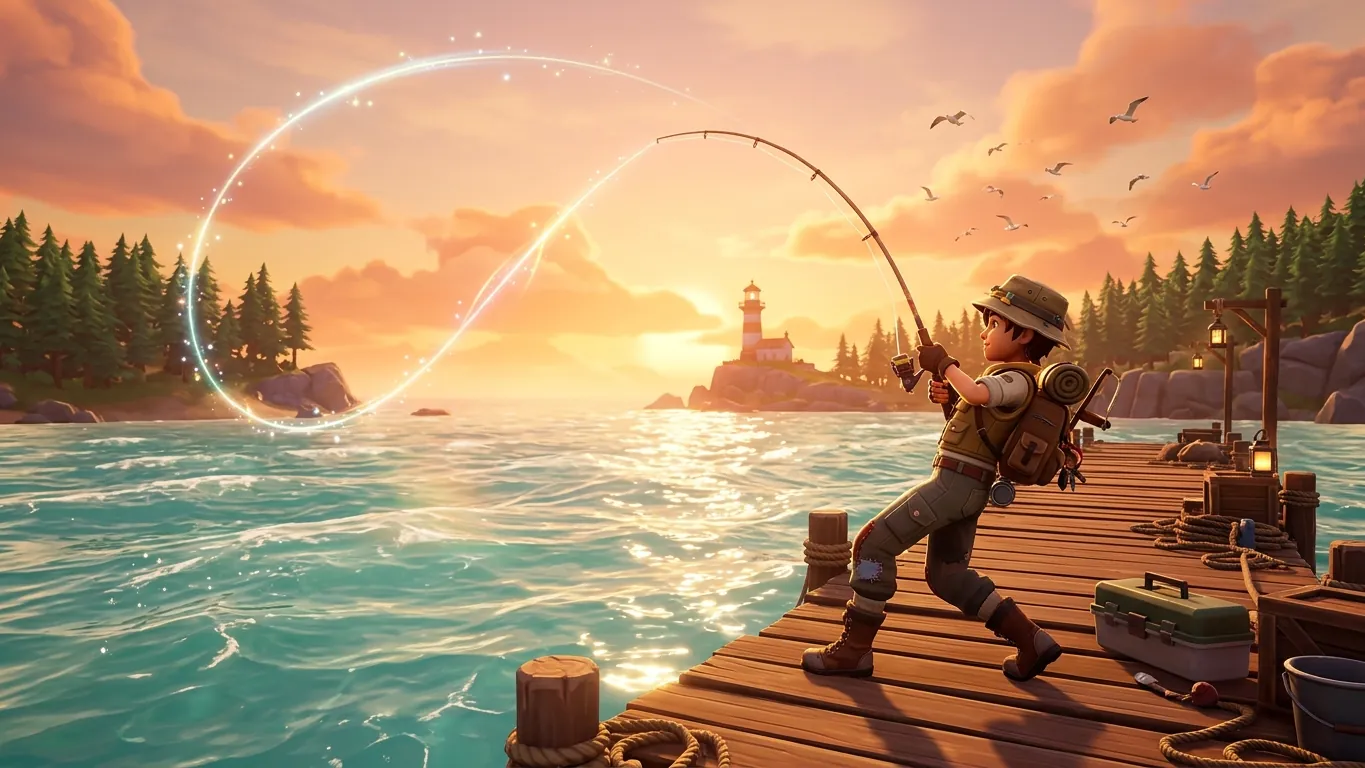
Understanding the core loop
Almost every fishing game follows a similar rhythm. You choose a place to fish, cast your line, wait for a bite, set the hook, fight the fish and finally land it. After that, the game usually rewards you with experience, in-game currency, a new entry in a collection log or simply the satisfaction of a good catch.
Knowing this loop helps you understand what the game is asking of you at each moment. When you are waiting, your job is to watch and stay patient. When a fish bites, the game shifts to timing and control. Thinking of each step separately makes it easier to see where you can improve.
Casting with intention
Many beginners cast as far as possible every time. Distance can help, but accuracy usually matters more. Games often place fish near specific features such as fallen logs, weed beds, rocky points or drop-offs. A short, accurate cast next to one of these features can be more productive than a long cast into open water.
Spend a few minutes learning how your game controls casting. Some titles use a power meter, others rely on how long you hold a button, and some use a simple aim marker. Practice a handful of casts toward a visible target until you can place your lure where you want it with some consistency.
Bites, hook sets and line tension
When a fish takes your bait, games usually signal it with a float dipping under, a rod tip bending, a sound cue or controller vibration. Reacting too early can pull the bait away, while reacting too late can let the fish escape. Watch closely during your first sessions to learn the timing your game expects.
Once hooked, the fight begins. Many games show line tension in some way. The general idea is to reel when the fish rests and ease off when it pulls hard. If tension rises too high, the line may break. If it stays too low, the fish may shake free. Finding that middle ground is the heart of most fishing mechanics.
Good habits for your first sessions
These simple habits can make learning a new fishing game smoother.
- 01
Start in an easy area
Most games offer a beginner lake or calm starting zone. Stay there until the basic controls feel natural.
- 02
Read the in-game guide
Tutorials and journals often explain which species live where and what bait they prefer.
- 03
Change one thing at a time
If fish are not biting, adjust either your spot, your lure or your depth, not all three at once, so you can see what made the difference.
- 04
Keep sessions short at first
Short sessions help you notice patterns without getting frustrated.
- 05
Enjoy the scenery
Fishing games are often designed to be calm. Taking in the view is part of the experience.
Be patient with yourself
Every fishing game has its own personality, and it is normal to lose a few fish while learning. Each lost catch tells you something about timing, tension or tackle. Over time, you will start to recognize the signs of a bite and the feel of a good fight.
If a particular mechanic still feels unclear, check the game's settings. Many titles allow you to adjust difficulty, assist options or control sensitivity, which can make the early hours more comfortable while you build your skills.
Related articles
 How to read the water in fishing games
Learn to spot structure, depth changes, current seams and cover in virtual lakes and rivers so you can choose better places to cast in fishing games.
Read more
 Tackle basics: rods, reels and lures in games
A plain guide to rods, reels, lines and lures in fishing games, with tips on matching your tackle to the species and water you want to explore.
Read more
 Planning a virtual fishing trip
How to plan a satisfying virtual fishing trip: picking a destination, setting goals, packing the right gear and enjoying the journey in game worlds.
Read more